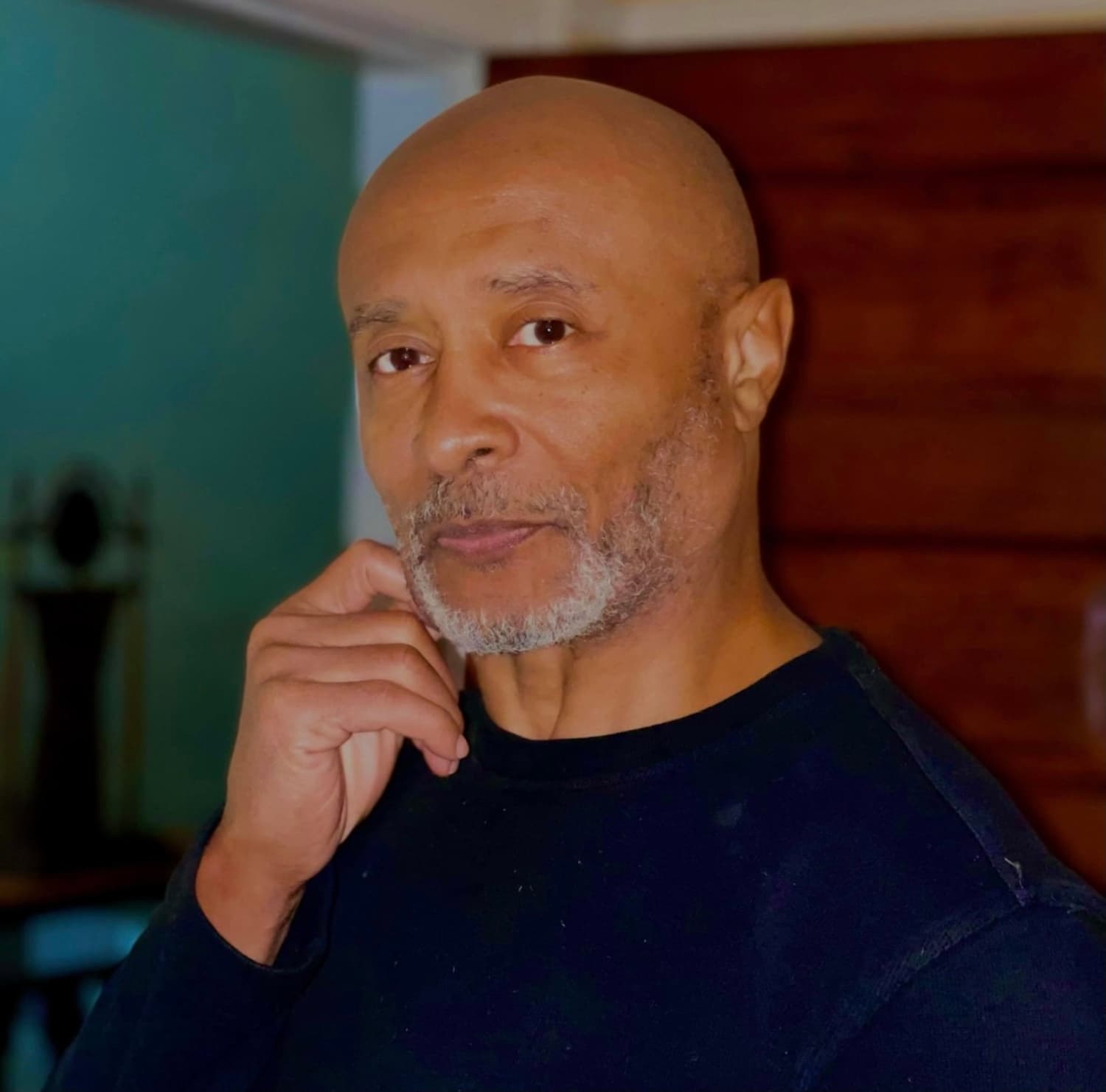
Photograph from the Palmer family archive.
Before the credits, there was a radio in Oakland.
Robert Donnell Palmer was born on December 19, 1953, in Cleveland, Ohio. His father, Robert Lee Palmer, died when Robert was two. At five, Robert moved with his mother, Ruthie Dell Palmer, and two of his sisters to Oakland, California, where they lived with his grandparents. His step-grandfather was a Baptist minister, and Sunday mornings meant church, Robert’s first introduction, as he would later say, to something larger than himself.
Music found him a few years later. In his memoir, Robert recalled riding through Oakland in his older sister’s deep-purple Pontiac convertible, leaning his head back beneath a night sky while Motown spilled from the radio: the Supremes, Smokey and the Miracles, the Temptations drifting out into the surrounding neighborhoods.
“From that moment forward, I knew, somehow or someway, I needed to be a part of the magic coming from that radio.”
San Bernardino
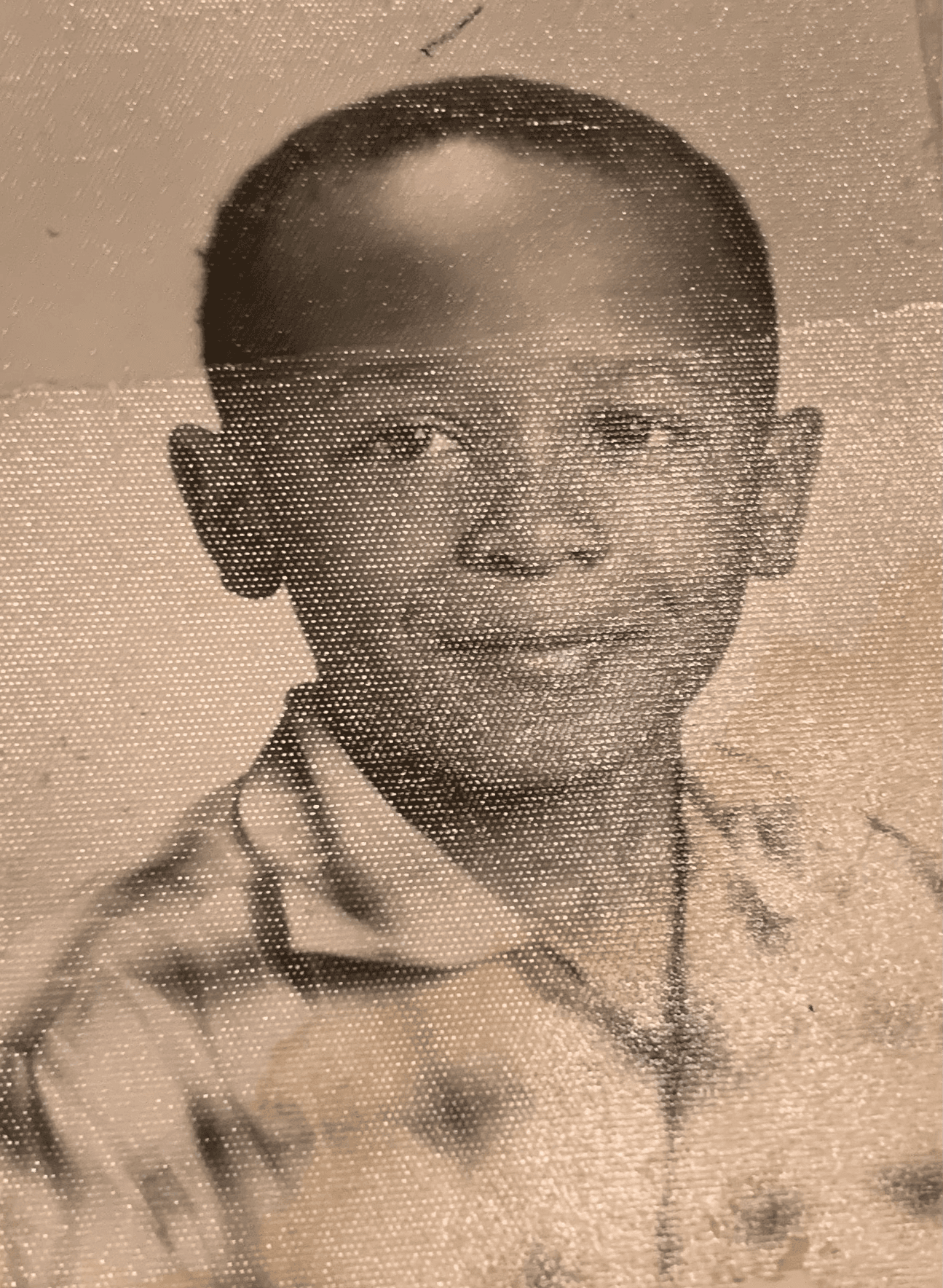
Photograph from the Palmer family archive.
After a few years in Oakland, the family moved to San Bernardino, sixty miles east of Los Angeles, by Robert’s account still one of the toughest stretches of Southern California. Many of his closest childhood friends did not make it out. That early grief, he later said, never fully left him.
At thirteen, he received his first guitar. Shortly after, he discovered Stax Records session guitarist Steve Cropper playing on Aretha Franklin’s “Chain of Fools,” and then Jimi Hendrix. He played in a band and had to learn most of Hendrix’s catalog by ear.
When Robert was expelled from ninth grade, his mother gave him a challenge rather than a lecture. In his memoir, he attributed the turning point to her directly:
“You need to make something great from a bad situation.”
He stayed in, sat in his room, and practiced until his fingers bled.
Early childhood details (Oakland, the move to San Bernardino, the first guitar) are drawn from Robert’s first-person account in From Misery to Hopeand haven’t been confirmed by outside sources.
The Booty People and the move to Hollywood
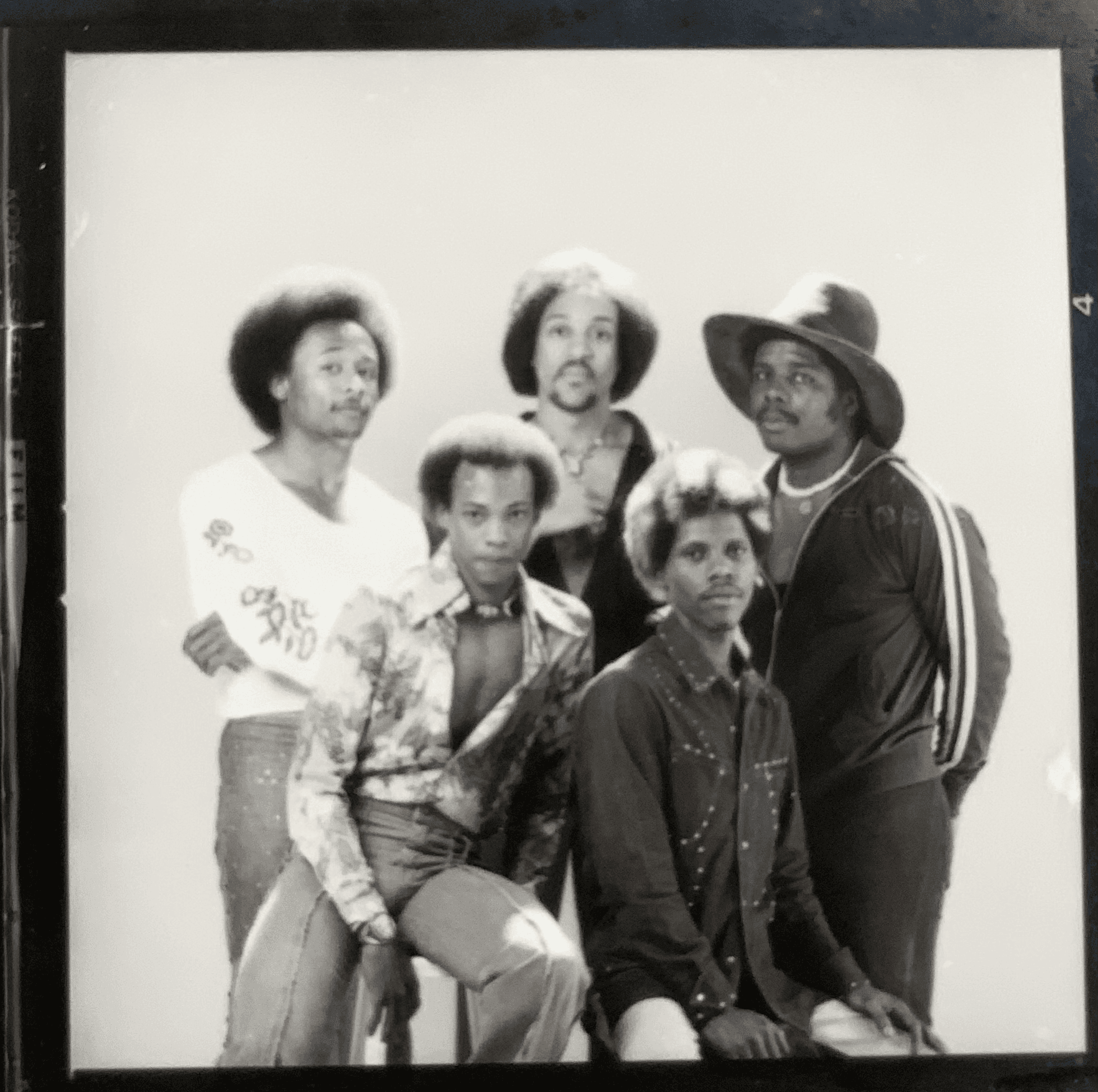
Photograph from the Palmer family archive.
In the early 1970s, Robert formed the Booty People with childhood friends from San Bernardino. In his memoir, Robert recalled that the group eventually signed a record deal through the Far Out Productions network (worth, by his estimation, the equivalent of half a million dollars today). (The group’s documented signing is to ABC Records; the precise contractual arrangement has not been independently confirmed from independent sources.)
The commute from San Bernardino to Los Angeles eventually became too much. The group decided to move to Hollywood together. When the group later separated, Robert stayed in Los Angeles and kept building.
By 1976, the work was showing. Robert co-wrote “Spirit of ’76” and, on June 12, Booty People appeared on Soul Train (episode 183) and performed the song. It charted across Billboard, Cash Box, and Record World. By December 4, 1976, Record Worldhad identified Robert D. Palmer by name in a photograph at the group’s ABC Records signing celebration. A published photograph from the same period places him with bandmates Riki Hendrix and Lemonsmyth before opening for War at the Swing Auditorium in San Bernardino.
In his memoir, Robert recalled the group also played at political rallies during this period, an account that has not been confirmed from independent sources.
Sessions, touring, and musical direction
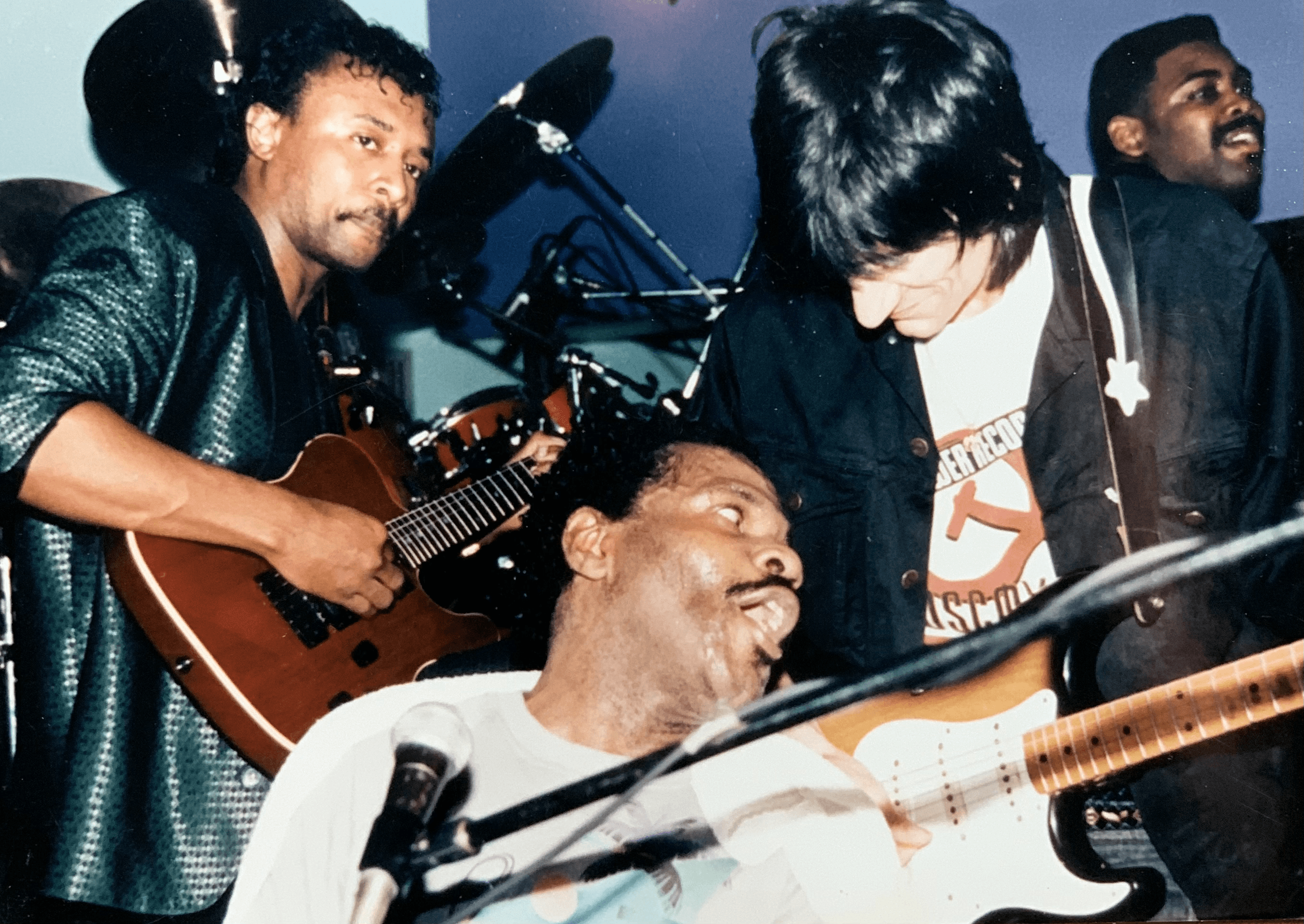
Photograph from the Palmer family archive.
After the Booty People years, Robert continued working across the Los Angeles session scene. Release records credit him with lead guitar on General Caine’s 1978 album Let Me In, and with acoustic and electric guitar on Billy Preston’s You Can’t Keep a Good Man Down. By 1982, he had co-written two tracks on Stargard’s Nine Lives.
In 1986, Robert performed as a guitarist with Little Richard and appears in the “Operator” music video, as identified through family testimony and an independent historical account citing “Robert Palmer of San Bernardino” as a Little Richard guitarist. Robert’s memoir describes additional work with Little Richard; his specific studio and musical-direction role has not been independently confirmed.
In his memoir, Robert also recalled session work with Natalie Cole, Peabo Bryson, Patti LaBelle, Bobby Womack, and Johnny Guitar Watson, among others, as well as guitar work connected to films including Bustin’ Loose. These accounts are drawn from Robert’s first-person recollections and have not been confirmed from release or production records.
Around 1980, Robert recalled being introduced, through actor Lawrence Hilton-Jacobs, to a young musician whose father, Sy Kravitz, was producing a project. Robert said he gave the boy guitar lessons during lunch breaks. He later encountered the same musician, then world-famous, at a restaurant in 1997. According to Robert’s account, that musician was Lenny Kravitz. This account is drawn from Robert’s memoir and has not been independently confirmed.
Songwriting and production
In 1998, Chaka Khan’s Come 2 My Housewas released on NPG Records. Robert contributed songwriting, co-production, and backing vocals at track level, including “Spoon,” on which he is credited as co-writer and co-producer. Howard McCrary, who collaborated with Robert on the project, later described him to Chaka Khan as “other,” meaning, in their shared vocabulary, out of this world.
In 2005, The Pussycat Dolls released “Stickwitu,” co-written by Robert D. Palmer. The song received a Grammy nomination at the 49th Annual Grammy Awards and reached number one on the Billboard Hot 100 in January 2006, dethroning Madonna from the top of the UK charts. The album sold nine million copies. In 2006, Robert was awarded the BMI award for songwriters.
“This was when I knew this would be my life’s path.”
Beyond the music
Photograph from the Palmer family archive.
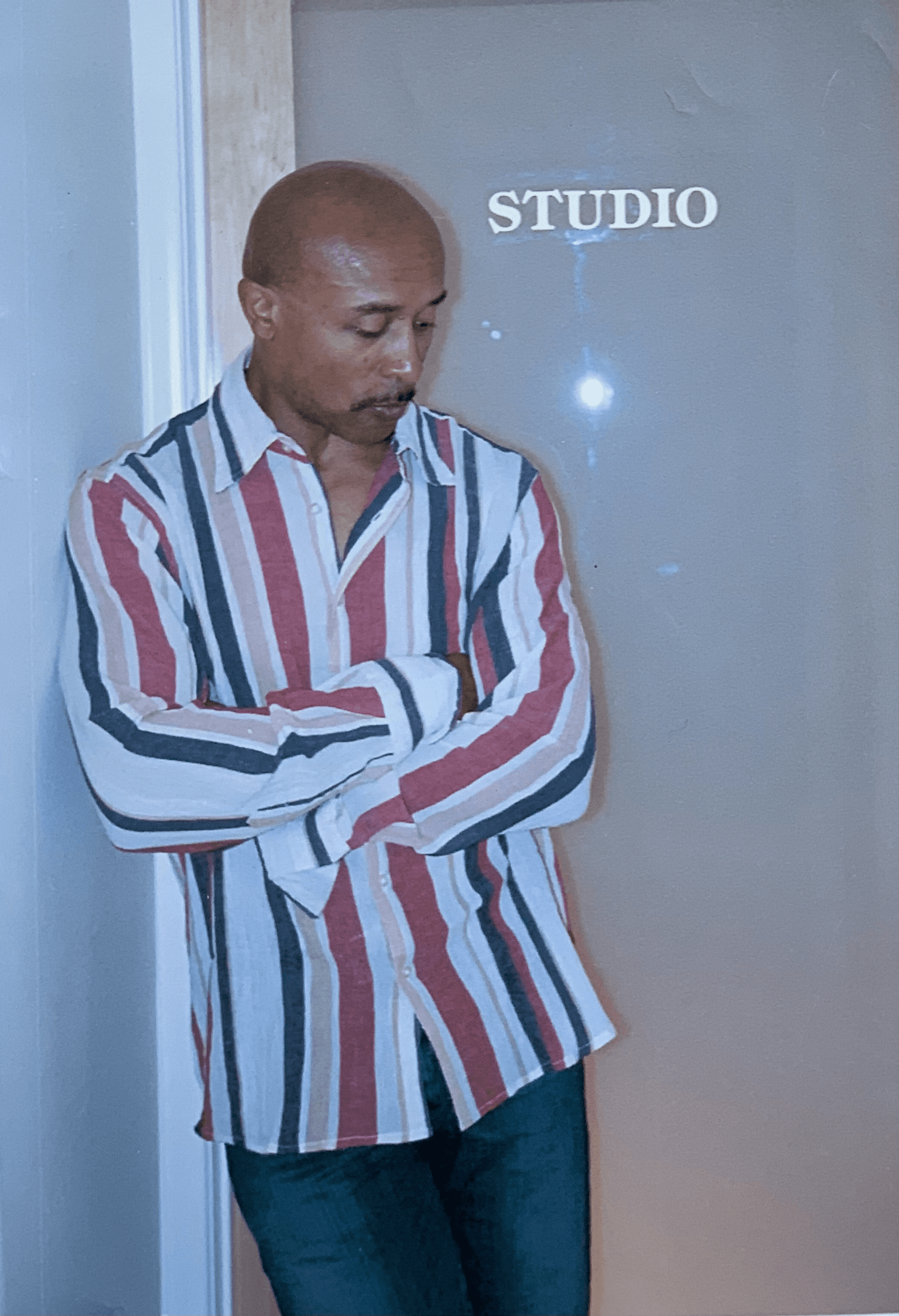
Robert was a father of six. His faith, which began with those Sunday mornings in Oakland, stayed with him throughout his life, a constant through seasons that were not always steady.
He fed people experiencing homelessness, volunteered with the Red Cross after Hurricane Irma, and mentored younger musicians. His long-held hope was to open a music school for young people from underserved communities, a way, as he saw it, of returning something to the world that music had given him.
People who knew Robert remembered his humor, his generosity, his extraordinary memory, and his habit of turning any conversation about life, music, faith, film, food into something that lasted hours. He loved films, was a formidable film trivia enthusiast, cooked, and had a serious interest in interior design. He was, by all accounts, genuinely curious about everyone he met.
Final years and the book
In 2018, Robert connected with his son Kary Youman, a reunion made possible through DNA. Their first conversation lasted more than six hours. Over the following year, conducted mostly by phone, a relationship grew between them.
In 2020, Robert moved to Portland, Oregon, to be closer to Kary and his other siblings. He had wanted a new chapter and, according to Kary, he found one. He told his family he loved living in Oregon.
During those years together, Robert and Kary developed a manuscript drawn from recordings, conversations, and Robert’s own writing. He titled it From Misery to Hope. Robert died on December 31, 2020, at age 67, before the manuscript was published. Kary completed the editorial process and the book appeared approximately six months later.
Legacy
Robert D. Palmer left behind a career that stretched from the San Bernardino soul scene of the 1970s to platinum-selling pop songwriting in the 2000s, and a body of studio work, much of it still being recovered, that spanned five decades of American music.
Kary Youman maintains this archive, gathering what can be confirmed, marking what can’t, and building the record that Robert’s life deserves.
“Life’s a combination of defining moments. You just have to hold on a little bit tighter to the greater ones.”
Mental health and legacy
Robert lived with mental health challenges for much of his life. His story included extraordinary creativity, deep connection, difficult seasons, and an ongoing search for hope. In preserving his life and work, his family also hopes to encourage more compassionate conversations about mental health and make it easier for people and families to find support.
The book From Misery to Hope addresses Robert’s mental health journey directly, in his own words. A mental health resource and content note is available on that page.